The Thing we never have to explain
Wakesho was supposed to wake everyone up.
That was her one job that Saturday, get up early, have them all ready to leave for Kerugoya by seven. Her older sister was in her final year at boarding school, KCSE year, and midterm visits were precious things. Short windows. You didn’t miss them.
She overslept. She blamed the week. She didn’t yet know what her body was quietly announcing.
They made it out of the house in a hurry. The road out of Nairobi gave way to green, the air cooled, and somewhere past Karatina a low familiar ache settled in her lower back. She shifted in her seat and told herself it was hunger.
By the time they stopped at a small roadside restaurant for snacks, she knew it wasn’t.
She went through her bag once. Then again. She looked at her mum. Her mum searched hers. They both looked at her younger sister, who stared back like they’d asked her something in a foreign language.
None of them had a single pad.
One of the women working there caught something in Wakesho’s face. Just a look. That was all it took. She didn’t ask her to explain. She simply said kuja, led her to the back, and within minutes had sorted her out, the right pads, a clean toilet, a moment to breathe. She waved off the thank yous like they were unnecessary. Like this was just what you did.
They made it to Kerugoya. They hugged her sister for too long. It was a good day.
Years later, in a corridor in Dublin, Wakesho nearly walked into a girl standing very still outside a bathroom. She had the look.
Wakesho stopped. “Do you need—”
“Yes,” said the girl, before she’d finished the sentence.
Wakesho had exactly what she needed. Some lessons you only have to learn once.
They didn’t share a country, Wakesho and that girl. They didn’t share a language. But they shared something older and more instinctive than either, a mutual, wordless understanding that crosses borders.
That woman in Kerugoya gave Wakesho something that day that went beyond a pad and a clean bathroom. She gave her the understanding that this is something women do for each other quietly, without fanfare, as a matter of course.
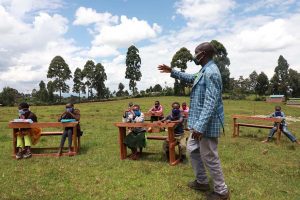
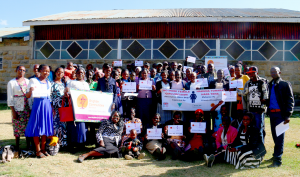
It is exactly what Brighter Communities Worldwide has been doing in Kenya since 2010. Through workshops in schools and communities across Kericho county, BCW trains girls and women on menstrual health, provides reusable sanitary kits, and creates safe spaces where menstruation can be spoken about openly; without shame, without silence, without anyone being left behind.
Because access to menstrual products and the knowledge to use them isn’t a privilege. It’s dignity. And dignity, as Wakesho learned on a roadside in Kerugoya, is something we can all play a part in passing on.
To support Brighter Communities Worldwide’s menstrual health programmes in Kenya, donate here.
This piece was written by Muswamba Mudiay to mark Menstrual Hygiene Day 2026, celebrated each year on 28th May as part of the global movement for a #PeriodFriendlyWorld.